Four Lessons from the Front Lines of Healthcare and Housing Strategy
What cultural intelligence, intentional engagement design, and governance alignment reveal about why conventional stakeholder consultation fails diverse communities

Over the past several years, I have led and contributed to strategic engagements across healthcare, housing, and the broader public sector. The work has included delivering tenant engagement strategies for social housing providers, contributing EDI expertise to successful funding applications for integrated health and social services hubs, facilitating equity-focused sessions for regional health centres and provincial agencies, and designing stakeholder engagement frameworks for Ontario Health Teams.
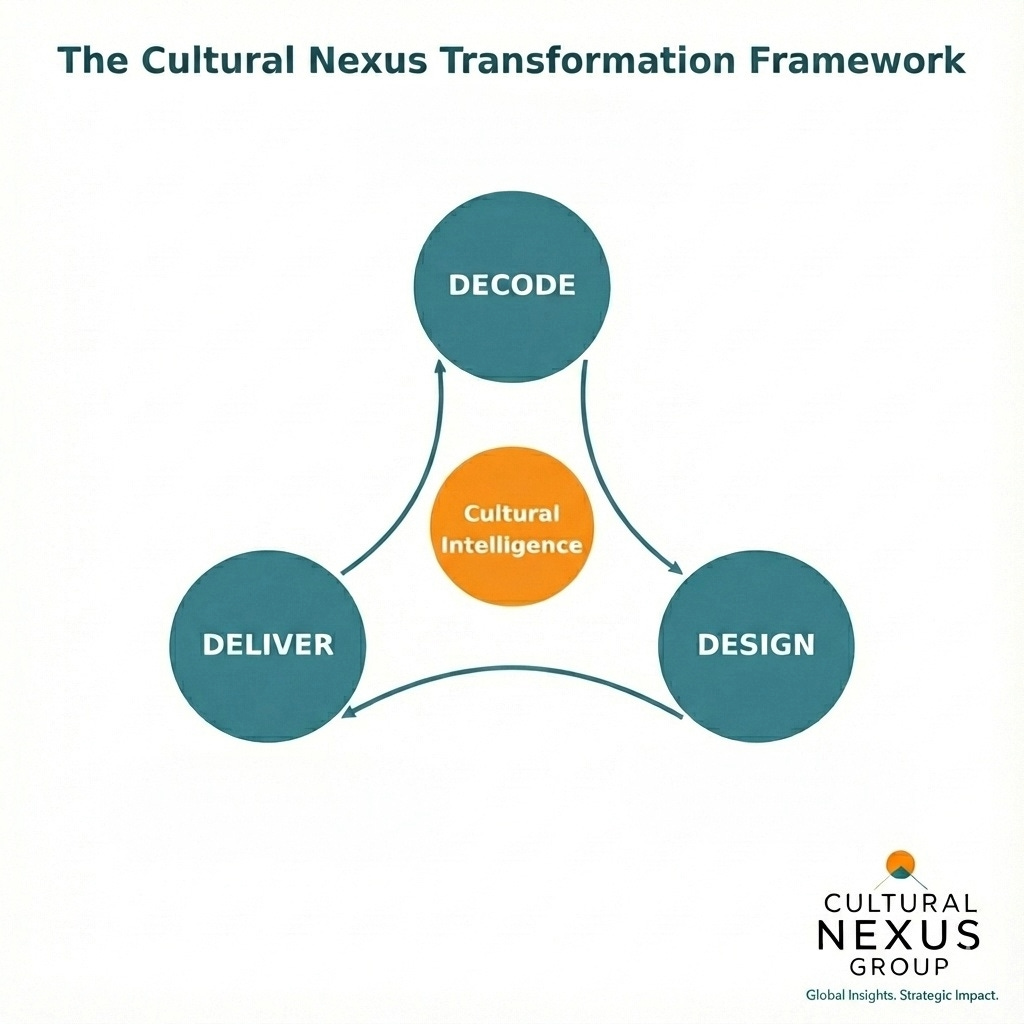
Each engagement, whether leading the full deliverable or contributing specialized expertise, reinforced lessons that apply across sectors and organization types. I offer four here, structured around the methodology that guides my practice:
DECODE the cultural context,
DESIGN the engagement architecture, and
DELIVER strategic solutions that stick
.
Lesson 1: Cultural Intelligence Reveals What Consultation Misses
Standard stakeholder engagement assumes that if you ask the right questions, people will tell you what they need. This assumption embeds a particular set of cultural expectations about voice, authority, and participation that do not hold universally.
When I delivered a comprehensive tenant engagement strategy for a large social housing provider serving over 30,000 tenants across dozens of communities, conventional consultation approaches had already produced years of feedback that failed to translate into governance change. The problem was not that tenants lacked opinions. The problem was that the existing engagement mechanisms embedded assumptions about individual voice and transparent decision-making that did not align with how many tenants actually experienced authority and collective participation.
Applying cultural intelligence meant recognizing that power distance expectations varied significantly across tenant populations. Some communities expected formal hierarchy and clear authority; others operated through consensus and relational networks. Communication norms differed: some tenants were comfortable with written surveys and public meetings, while others required oral engagement, trusted intermediaries, and smaller group settings.
This was not a matter of translation or accessibility accommodations, though those mattered too. It was a question of whether the engagement architecture itself respected how different communities make decisions, voice concerns, and build trust with institutions.
The strategy I delivered restructured survey instruments, redesigned focus group formats, and developed culturally distinct community engagement approaches rather than one-size-fits-all approaches. It applied the Equity Ecosystems Model to identify where organizational structures created barriers, and it included cultural intelligence training tools to help staff continue this work beyond the engagement.
The lesson here is straightforward: cultural intelligence transforms stakeholder understanding. Organizations that treat diverse populations as a demographic category to be consulted will continue producing plans that fail to land. Organizations that decode cultural context first—understanding power distance dynamics, communication patterns, and decision-making expectations—build strategies that communities recognize as their own.
Lesson 2: Engagement Architecture Must Reflect Community Reality
Strategic planning typically begins with environmental scanning and stakeholder analysis. The problem is that these processes often reproduce the perspectives of those already at the table rather than surfacing the priorities of those the organization exists to serve.
When I designed equity-centred focus groups for a local community Ontario Health Team, the challenge was to ensure that diverse voices actually shaped priorities and service delivery models rather than merely validating decisions already made. Ontario Health Teams are expected to coordinate care across providers and settings, but their governance structures often privilege institutional partners over community members.
The stakeholder engagement framework I developed moved beyond representative consultation toward structured processes that centred lived experience. This meant designing sessions where community members set the agenda, where facilitators created space for dissent and complexity, and where outputs were presented in forms that community participants could validate before they reached leadership tables.
Contributing EDI expertise to other engagements reinforced this lesson from different angles. When I supported a funding application for an integrated health and social services hub serving Black, African, and Caribbean communities, my contribution focused on policy research examining systemic disparities and facilitating community engagement sessions. The application succeeded in part because it reflected what community members actually said about culturally responsive services, not what institutional partners assumed they needed. Demonstrating genuine community partnership required engagement architecture that surfaced specific service needs and validated them through the communities themselves.
The lesson is that engagement architecture determines whose reality appears in your strategy. If your process privileges written submissions, you will hear from those comfortable with bureaucratic forms. If your timelines compress community input into a single meeting, you will capture surface reactions rather than considered priorities. Designing engagement that reflects community reality requires intentional choices about format, timing, facilitation, and feedback loops.
Lesson 3: Governance Structures Must Enable Strategic Execution
Strategic plans fail when governance structures prevent their implementation. This sounds obvious, but organizations regularly produce ambitious strategies without examining whether their boards, committees, and decision-making processes can actually execute them.
Facilitating equity-focused sessions within broader strategic engagements repeatedly exposed this gap. When I facilitated sessions for a regional health centre, the conversations surfaced how governance structures either enabled or obstructed equity commitments. Healthcare governance has become more complex as integration demands increase. Boards must simultaneously oversee clinical quality, financial sustainability, workforce strategy, digital transformation, and community partnerships. Without clear structures that delegate appropriately and maintain strategic focus, boards become either rubber stamps or operational micromanagers—neither of which serves organizational effectiveness or equity goals.
Facilitating sessions within a provincial agency’s strategic planning process revealed similar dynamics. Securing board buy-in for new strategic directions requires understanding what board members need to see, how they evaluate options, and where concerns might emerge. Equity considerations cannot be bolted on at the end; they must be visible in how analysis is structured and how recommendations are presented.
These facilitation experiences reinforced a broader lesson: governance either enables or obstructs execution. Strategic planning that ignores governance produces documents that sit on shelves. Effective engagements must assess decision-making structures early, identify where change is needed, and build implementation pathways that work within governance realities—or propose governance changes as part of the strategy itself.
For EDI specifically, this means ensuring that equity commitments are embedded in accountability frameworks rather than isolated in advisory committees without decision-making authority. Organizations that create equity positions without governance power produce reports and recommendations that fail to change how decisions are made or how resources are allocated.
Lesson 4: The Cycle Reinforces Itself
These lessons are not sequential steps to complete and move past. They form a reinforcing cycle where each phase informs the others.
Decoding cultural context shapes how you design engagement. Engagement surfaces governance barriers you did not anticipate. Governance changes create new implementation contexts that require fresh cultural analysis. Organizations that treat strategic planning as a periodic exercise—every three to five years—miss this dynamic entirely.
The most effective organizations build adaptive capacity: ongoing relationships with communities, regular governance reflection, and engagement processes that continue beyond formal planning cycles. When a social housing provider implements a tenant engagement strategy, staff will discover new cultural dynamics in communities they thought they understood. That discovery should trigger fresh analysis, not defensiveness.
This is where cultural agility becomes essential. Cultural humility recognizes what organizations do not know about the communities they serve. Cultural intelligence provides frameworks for understanding how different populations experience authority, communication, and participation. Cultural agility is the operational outcome: the ability to adapt in real time based on what you learn.
Strategic planning that embeds this cycle—DECODE, DESIGN, DELIVER, and return to DECODE—produces organizations capable of continuous learning rather than periodic course correction.
These four lessons emerged from specific engagements, but they apply broadly to any organization navigating stakeholder complexity, governance challenges, and implementation demands. If your organization is developing a strategic plan, conducting a governance review, or assessing how to engage communities authentically, I work with public sector and nonprofit leaders to translate these principles into practice. Reach out directly to start that conversation, and subscribe to Cultural Currents for ongoing analysis of healthcare, housing, and human services strategy.